Sunday, December 22, 2013

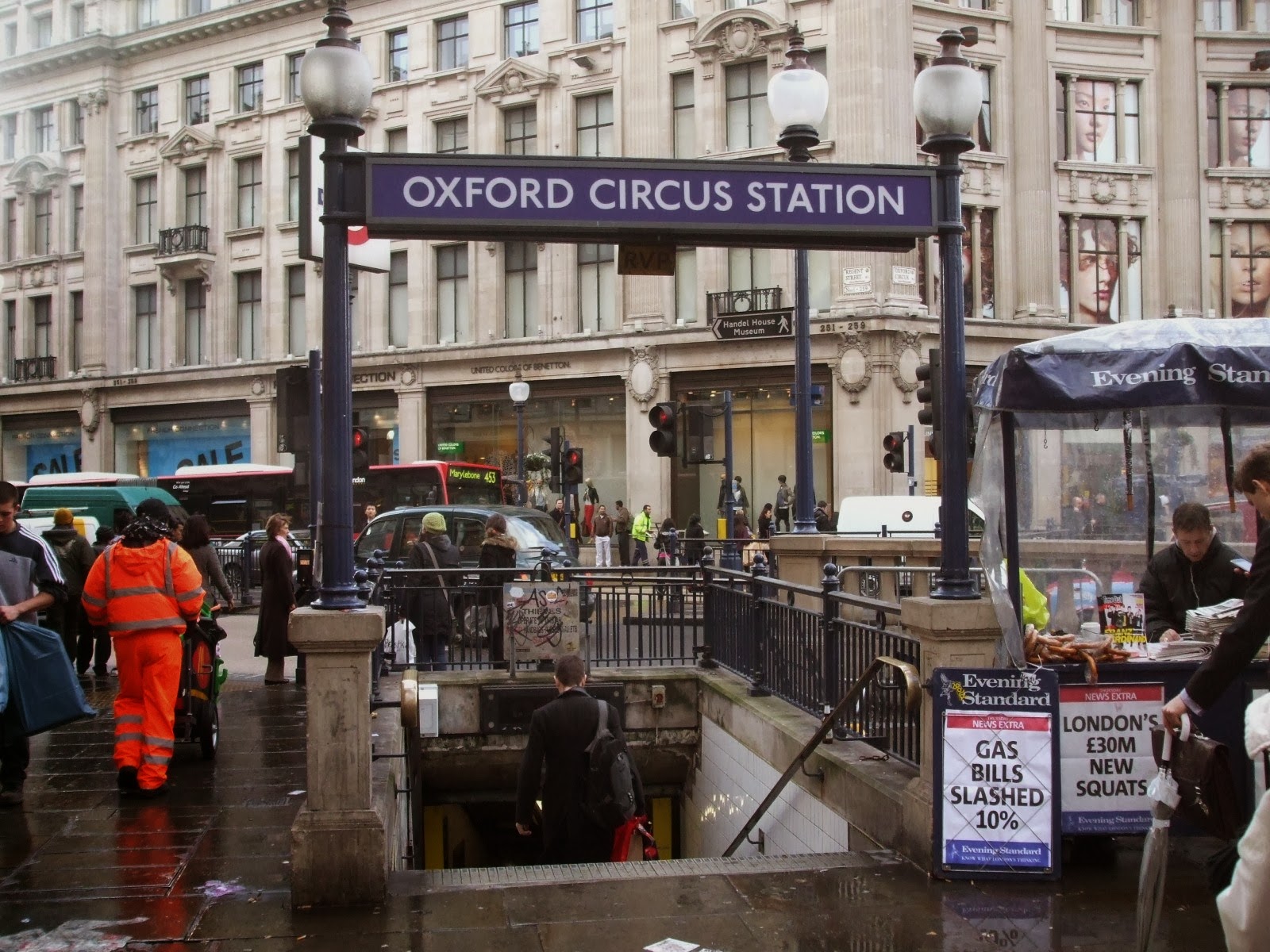
Subway Zombies

Time for more zombies via All Flesh Must Be Eaten. I may pick up Rotworld in the near future out of curiosity and to help out Dan. If I do and I can handle the system, I'll be sure to start double-statting these write ups.

photo by Sunil060902
The Subway

The subway tunnels were a good idea. I had my flashlight, but Dante’s stopped working last night. He still had it taped to his grandfather’s old shotgun, in case we found batteries. We ran down here hoping to find a good place to hide and let things cool down upstairs.

There were shamblers on the platform, but they were feeding in a crashed subway car. We sprinted past and ran down the tracks. We tried every single door we found. They were all locked. Eventually, we came across a hallway that looked to lead to another set of tracks. We squeezed into it and snuck our way towards the other tunnel. Maybe halfway there, we see a portion of the wall has collapsed and an opening in the wall awaits us.

We began to hear a sucking noise as we grew closer. I covered my flashlight with my hand, reducing the amount of light. Dante snuck up to the edge of the collapsed wall and looked into the hole. He yelled, jumped out from hiding, brought his shotgun up to fire it, and bent over retching. I reach out to steady him, but another hand beats me to him.

photo copyright Alumy

Before the Fall
Entrance to the subway requires use of a pass card (employees) or ticket (customers). There are several types of turn-styles throughout the subway system. Which system is in use is mostly dependent upon when the platform was built. The oldest platforms have a full body turnstiles. Newer platforms and replacements in the older platforms use a simple half-body turnstile. Both require a pass card or ticket to be inserted into a slot before the stile will unlock and allow one person to pass through the gate. Once there is no electricity left, these devices will no longer operate, becoming locked doors.

The subway system has several layers to it. The top-most layer is where riders of the subway typically spend most of their time. This level consists of platforms, tunnels for the subway cars to transport people, administration offices, elevator shafts, and transfer platforms often have retail shops and restaurants. Mechanical rooms can be found throughout the tunnel system. These rooms serve various functions. Some are simply machine rooms where parts can be fixed. Others have electricity and water pipes running through them, with controls for both on the walls. There are also very large rooms containing major electrical relay stations.

Descending what feels to be two or three stories of stairs, the next floor down consists of platforms, tunnels, and mechanic rooms. There are very few platforms on this level. The lower level platforms are the “express” platforms. The subway cars connect from areas of dense residency to areas of dense businesses. There are tunnels that connect the express platforms to the standard platforms. These platforms are also the oldest, going back to the early part of the twentieth century. These platforms and tunnels are also the least clean and most dangerous of the platforms. Gang tags and graffiti cover all of the walls, most of the ceiling, and the occasional floor section. Gangs use different platforms as meeting places and drop points. They have also taken over several mechanical rooms in the tunnels. Hallways on this level connect to the upper level via long ramps. These hallways often serve as a way to move from one block, under a subway tunnel, back up to the first level platform on the other side, granting access to yet another subway system.

Scattered throughout the platforms are gates which can be strewn across openings to block access to hallways, stairwells, and the turnstiles. These are used when areas are under construction or repair, to limit access when filming of movies is taking place, or if there is a safety concern the administrators want to keep isolated from pedestrians.

Hallways wide enough for a single person to walk through connect all of the various platforms, levels, mechanical rooms, and tunnel systems. These hallways have no light source outside of exit signs above doors. The floors, ceiling, and walls alternate between brick, concrete, and cinder block. All are cold to the touch.

Access points to the sewer system can be found throughout the tunnels. Rung ladders leading up to manhole covers at the street level can also be found in the tunnels.

image copyright Monochrome

During the Rise
The subway system was a dangerous place before the fall of man. Now that the dead walk the Earth, one’s personal safety has only worsened below ground. During the rise, several groups of people thought they could barricade themselves in different sections of the subway system. They failed to realize whole platforms were already overrun by the hordes. These hordes eventually began wandering the tunnels in search of fresh flesh.

As if the wandering zombies were not a large enough problem, those attempting to survive often struggle with other humans. The gangs have claims to territory and some of them are still in control of their areas. Smart gang leaders will set up guards at entrances. Those lacking in leadership and survivability will simply collect their henchmen around them on the platforms as they contemplate what to do next. An original group of people who survived a subway car crash are in one of the large mechanical rooms. The subway cars crashed near the mechanical room. A police officer led the survivors of the crash to this room and used the landline to call for help. No one is answering the other end. Several people have left the mechanical room, but none have returned. A handful of people are severely injured. They are currently stabilized, but if they do not receive treatment soon, they will die.

The subway system during the rise becomes a special kind of hell. Electricity works in some places, but not in others. This not only affects lighting sources (how long do you really think that cell phone app is going to work without a way to recharge it?), but also whether or not the tracks are “live” with electricity. Those lights which are currently working often flicker and pop as other systems go offline or jump back online. Smoke and fire are seen and can be smelled. Crashed subway cars have destroyed power lines, causing a very real danger in the way of fire. The smoke from the fire obscures vision and wreak havoc upon the ability to tell friend from foe or zombie. Crashed cars may also result in water pipes being damaged. Pooling water near working sources of power can only result in bad things.

The sound of crackling fire and burst water mains are not the only sounds echoing throughout the tunnels. The moans of the dying are heard, some louder than others. The shuffling of feet can be heard just around the next corner. Do they belong to an injured person or a zombie? Dare you call out to find out? Some find the silence to be worse than the sound of the dying. Does the silence mean there is nowhere or thing out there or does it mean whatever is out there is being silent, just like you?

photo by Jonathon Warren

After the Fall
Once mankind has fallen and the zombies have wrested control, the subway tunnels become empty caverns. Footfalls echo on platform walkways. Elevator shafts are empty and only provide a place to die, cornered by slavering mouths and rending fingers. There are no light sources. All of the burst water mains have run dry. Crashed subway cars block paths. Zombies wander the tunnels looking for their next meal.

Survivors will be tempted to make a base of operations in one of the mechanical rooms. The entrances to these rooms are generally within a quarter mile of a platform. Gates and turnstiles can be used to keep the zombies out of the general vicinity. Subway cars can be scrapped for parts:  pads from seats and couches for sleeping on, sheet metal for reinforcing doors and other barricades, metal pipes for weapons, etc.

There is a good chance a mechanical room once held other people trying to survive. The door may already be barricaded or locked. Once the door has been breached, the smell of dead bodies will overwhelm the characters attempting to access the room. Depending on how the former residents died, they may be zombies awaiting dinner or they may be bodies to be removed before disease can take hold of the new community. If the door must be breached, how will the party re-secure it?

Survivors who stay too long in one of these rooms will find themselves cornered by a horde. Due to the number of tunnels, hallways, and random access points, zombies (and rats!) will find a way through various barriers set before them. If the survivors do not cover their tracks well enough when egressing or digressing the underground hideout, they may leave clues that other survivors may read as potentially leading to a new home for themselves. Does this new group just want a place to hide out for a night or two or are they willing to fight for their own place here among the tunnels?

image by bigNickel Posters at Etsy

Random Subway Generator
To create a subway line, roll 1d6+4. The result is the number of platforms in the line. Give each platform a name (most often the street where the subway lets out) and write them horizontally or vertically on a piece of paper. For example, a result of 7 platforms could be created as such:

Sheridan                Addison                 Belmont                 Central                   Division                  Ashland                 Pine Grove

Or even as:

1                              2                              3                              4                              5                              6                              7

We will call this the “312 Subway Line.”

Then, for each platform, discern which other platforms are connected. To do this, roll 1d6 and interpret the results as such:
1d6 Result
Connection
1-2
Connected to the next platform
3-4
Connected to the second next platform
5
Connected to the third next platform
6
Connected to another subway system and the next platform


If the die result moves the line past the final platform, wrap the line back to the first platform and continue counting.

For our example, we start with Sheridan. A roll of “1” connects Sheridan to Addison. A roll of 3 or 4 connects Sheridan to Belmont. A roll of “5” connects Sheridan to Belmont. A roll of 6 connects Sheridan to another line. Re-rolling the die, a “2” results in connecting Sheridan to Addison. Once the first platform’s connection is known, move on to the next platform and continue until all connections are known.

Continuing to roll the die, the 312 Subway Line develops into this format:
·         Sheridan connects to Addison
·         Addison connects to Central
·         Belmont connects to Central
·         Central connects to Pine Grove
·         Division connects to Ashland
·         Ashland connects to Pine Grove
Even though the 312 Subway Line does not have tunnels which connect to other subway lines, there are always hallways to connect the lines.

A second set of die rolls results in eight platforms and 3, 5, 2, 4, 6, 1, 5, 1 on 8d6. The results for the Golden Line are:
·         Wharf platform is connected to Hide
·         Bay Street connects to Downtown
·         Hide connects to the Aquarium platform
·         Aquarium connects to the Financial District
·         Downtown connects to the 312 Subway Line and the Financial District
·         The Financial District connects to the Mason platform
·         Mason connects to Bay Street
·         California platform connects to the Wharf platform

If these results are confusing and circuitous, it is okay. The underground should feel odd and disorientating until the characters map it out. By creating a high level view of the subway line, a Zombie Master can better develop different obstacles among the various tunnels. If the characters need to gain access to Mason platform from the Downtown platform, it may be quicker to go through the tunnels via the Financial District platform and on to the Mason platform. However, this route may also contain the most zombies. Going through the tunnels to the Bay Street tunnels and on to the tunnels leading to Mason may take longer, but it may also be the safer of the two routes.

Next, determine the type of platform. Any platform with only one connection rolls 1d6 and compares the results on the first table. The second table is for any platform that connects to more than one other platform within the same line or a different subway line. These platforms use a d10 to determine type.

1d6 Result
Platform Type
1-3
Standard platform
4
Standard platform with administration offices
5
Express platform
6
Standard platform with retail stores and restaurants


1d10 Result
Platform Type
1-2
Transfer platform
3
Transfer platform with administration offices
4-5
Transfer platform with retail stores and restaurants
6
Transfer platform with an express platform
7
Transfer platform with administration offices, retail stores, and restaurants
8
Transfer platform with administration offices and an express platform
9
Transfer platform with retail stores, restaurants, and an express platform
10
Transfer platform with administration offices, retail stores, restaurants, and an express platform


The 312 Subway Line has the following platform types

Platform Name
Platform Type
Sheridan
Standard platform
Belmont
Standard platform with retail stores and restaurants
Central
Transfer platform
Division
Standard platform with administration offices
Ashland
Standard platform
Pine Grove
Standard platform


The Golden Subway Line has the following platform types

Platform Name
Platform Type
Wharf
Transfer platform with administration offices, retail stores, and restaurants
Bay Street
Transfer platform with administration offices and access to an express platform
Hide
Standard platform with retail stores and restaurants
Aquarium
Standard platform with retail stores and restaurants
Downtown
Transfer platform with administration offices, retail stores, restaurants, and an express platform to another subway line
Financial District
Transfer platform with retail stores, restaurants, and access to an express platform
Mason
Transfer platform
California
Standard platform


There will be die rolls whose results make no sense. In those instances, simply re-roll or make an executive decision on the platform type.


Locations
First floor basic platform – This is the basis for all other platforms. There are subway lines going both directions. Depending on the subway system, there may be a wall between the two lines (Chicago’s red line under the River North neighborhood), there may be no visible way to get to the opposite platform from here (go back, go down and around, go up. . .like some of the subway platforms in NYC), or the platform may be in the center of the two like an island. Before the fall, there is ample light and plenty of people here. Depending on the city and the subway line, trains will typically arrive every fifteen or thirty minutes. A police or security officer can generally be found at most platforms.

Second floor express platform – This platform is a level below the first underground level. Due to the structure needed for support of the first floor, this level is two to three stories below the first. An elevator shaft descends at one end of the platform, a staircase twisting around it like a helix. An escalator for both directions is at the opposite end. The lights for this level are fluorescent and more than thirty feet above the platform. Pedestrians descending are often blind to anything on the platform level until they are below the lights. Then, once they are on the platform, everything becomes shadowed and grey-tinged from the fluorescents. Police and security rarely come down to this level. After the fall, this place is a death trap. With no light source and no electricity, it is impossible to see anything. Zombies lost in these tunnels are often starved and emaciated. Survivors on this level are either the nastiest bunch you ever met or scared waifs looking for a way out.

Transfer platform – The transfer platform is much like the first floor basic platform, only larger. At least two subway lines converge on this platform. This increases the number of people in the area, the amount of crime, and the likelihood of a zombie outbreak going horribly awry. Transfer platforms have more visible security or police. They also have security cameras watching the crowds. Long, wide hallways will guide passengers between the two subway lines. A passenger can expect to walk five to fifteen minutes between platforms.

Retail and Restaurants – The largest of the platforms will have a group of retailers and restaurants for passengers to patronize. Sample retailers include music stores, t-shirt stores, men’s dress clothing stores, barbers and beauticians, and souvenir shops. Restaurants vary with the clientele and the level of traffic. If the platform is as busy as NYC’s Grand Central Station, all types of restaurants may be found. High end wine bars rub shoulders with pizza joints serving slices of pie. Most subway lines will not be so varied. They are likely to have one or two known franchises selling hamburgers or sandwiches and one local eatery trying to make a name for itself. Platforms with retail and restaurant locations are more likely to have people passing out leaflets or asking for signatures for their favorite cause. They are also more likely to have street performers dancing, signing, or playing a musical instrument.

Administration offices – These offices can range from simple break rooms for the workers in the area to official offices for the subway line. The latter are likely to have offices for managers, engineers, administrators, and police/security.

Small mechanical room – This room is more of a closet. The room will not be larger than one hundred square feet. A table, possibly a chair, a vise clamp, and some tools are all that are likely to be found here.

Medium mechanical room – The next step up from the small mechanical room, this location is likely to have enough room to fit twenty or more people comfortably. Electrical conduits and water pipes run along the walls. This room will have everything contained in the small mechanical room and more. There are likely more tools, more tables, chairs, a box fan as the air circulation is not good, a sink, a mop sink, and potentially more affects from home. This room may be used by engineers as a break area or sleep area when on call or working long shifts.

Large mechanical room – This room operates as a small power station. Oil tanks sit around the room. Transformers enclosed by a wire fence and padlocked gate line one wall. Large water pipes lead down to the sewers or out towards offices. This room will not have many amenities, but it may have larger tools not found in the small or medium mechanical rooms. These rooms tend to have open space where larger items can be stored. Some of these rooms may sit below administration offices and have a ladder or stairwell leading up to the offices.

Tunnels – The subway tunnels are as wide and tall as they are dark after the fall of mankind. Sounds echo for long distances. The gravel you just heard move could be a friend, foe, zombie, or just a large rat. The tunnels are the quickest way to move around the underground. However, they are also the most likely to be filled with zombies, crashed subway cars requiring a climbing effort to traverse, and other survivors looking for the food in your backpack. Depending on the age of the subway line, nearly anything can be found in the tunnels. Work trucks may be parked in an open area with no tracks. Rooms stocked with bottled water, a working generator, and a fridge full of lunchmeat and frozen pizzas are just around the next bend. Urban legends claim everything from giant alligators to extraterrestrial biological entities to forgotten war experiments may be found in subway lines. There are also traps left behind by other survivors to be found. Just because the people are not to be found, does not mean their traps have been sprung. Perhaps they were rescued during a supply run and never came back. The pit trap dug around the tracks would still be there, as would the trip line to sound an alarm bell – and bring a horde of zombies! The tunnels have rung ladders built into the walls that lead to street level access via manholes. Manhole covers typically weigh over one hundred pounds.

Hallways – Hallways crisscross the entire network of the subway system. They connect platforms for pedestrians. They connect tunnels and mechanical rooms for engineers. They lead to unknown places best left alone. Most hallways not designed for pedestrians are designed for engineers and mechanics. They were also designed more than fifty years ago. The tunnels can be dilapidated, brick work patched together with newer concrete. There may be holes in walls leading to rooms with nothing but sandwich wrappers and empty beer cans littering the floor of the room. Animals may create nests in these hallways. Imagine a group of characters escaping a horde of zombies down a long tunnel, only to discover a giant nest of rats or another group of zombies wandering from the other end of the tunnel. These tunnels should be cramped, six feet tall and twenty-eight inches wide, at most. There is no fighting two-abreast here. Nor is the use of firearms particularly wise. Discharging a firearm of any sort will echo and resound throughout the hallway. The results are drawing more zombies and everyone becoming deaf for the time being. Particularly large caliber firearms may even cause permanent hearing loss.

Sewers – Sewers are never thought of as nice places to visit. Sewers below, around, and in some cases, above subway tunnels are no better. Using the sewer system is nearly as dangerous as using hallways – except there is always water. Overflow basins and water pumping plants are popular places for larger items (alligators, rats’ nests, dead bodies, zombies) to collect. These areas will be very unhealthy for the living. After the fall, when the equipment has stopped to work properly, fungi and molds grow and cover most surfaces.

image from pixel pandemic
Subway Zombies
Strength  2
Constitution  2
Dexterity  2
Intelligence  0
Perception  1*
Willpower  2

Dead Points  15
Speed  4
Endurance Points  n/a
Essence Pool  9

Attack:  Bite Damage d4 x 2 (4)
Weak Spot:  Brain (+6)
Getting Around:  Life-Like (+3) 
Strength:  Dead Joe Average (0)
Senses:  Like the Dead (0), Acute Senses (Hearing) (+2, as the Quality)*
Sustenance:  Weekly (+4), Sweet Breads (-3)
Intelligence:  Animal Cunning (+2)
Spreading the Love:  One Bite and You’re Hooked (+2)
Special Aspects:  Horrific Appearance 1 (+2) (AotWD), Spores (+5) (If more than 10 points of damage are delivered to the torso or fifteen points to the head, the zombie’s body erupts with mold spores over a four foot cone area. Breathing in the spores is the same as being bit by the zombie:  once the character dies, it is only a matter of time before they return from the dead. The mold is also a highly toxic allergen likely to cause breathing problems and may cause long term Constitution damage.)
Power:  23


image copyright MGM

Subway Engineer
Survivor

Strength 4
Dexterity  3
Constitution  3
Intelligence  4
Perception  3
Willpower  3

Life Points  47
Endurance Points  35
Speed  12
Essence Pool  20

Qualities/Drawbacks (10/5)
Charisma 2 (+2)
Cowardly 1 (-1)
Delusions (Phobia) (-1) (going above ground)
Hard to Kill 3 (+3)
Honorable 2 (-2)
Impaired Senses (Sight) (-1)
Jury-Rigging  (+3) (OotL)
Strong Stomach (+2) (OotL)

Skills (35 + 5 from Drawbacks)
Brawling  2
Climbing  1
Demolitions  1
Dodge  3
Drive (Car)  1
Electronics  2
Engineer (Mechanical)  4
Engineer (Civil)  4
First Aid  2
Hand Weapon (Club)  2
Instruction  1
Intimidation  2
Mechanic  3
Notice  2
Repair (Plumbing)  2
Scavenging (OotL)  2
Stealth  2
Streetwise  1
Traps  3

Gear
Folded up collection of subway tunnel maps, knife, large flashlight, multi-tool, safety helmet with light, lead pipe, radio with working batteries, tool kit

Personality
I was working in the tunnels when the world went to shit. Me and the boys were tearing apart an engine in the mechanical room near the Division Street platform. The first indication we had of something being wrong was when Mark came in covered in blood. We thought he had been nicked by one of the cars. Donnie had that happen to him last year; lost his left arm and leg. No sooner do we get Mark calm enough to talk, that voices start screaming through the radios. Naturally, we turn the radios down to better hear what Mark has to say.

Mark starts rambling about being attacked and bitten. We all figure he ran across that new gang hanging around Central. Ramone gives Mark some Oxy that he’s held onto since his back surgery and Mark is fast asleep. We patch up Mark the best we can and as he’s no longer bleeding, we figure we’ll take him up with us when we’re done working.

We needed parts from our room over by the Pine Grove platform. Ramone turns his radio back on and calls over. No one answers. He tries twice more. No answer. I try my radio and get the same result. The rest of the guys pull out their radios, turn them on, and start calling over to Pine Grove. Pine Grove doesn’t answer, but the feedback loop confirms the radios are working. Ramone calls base and no one answers. I tune to the security channel and call for help. No one answers.

Two teenagers burst into the room, at that point. We often catch kids in the tunnels looking for drugs, sex, or brews. These two were scared stiff. The girl starts screaming about locking the door and getting out of the tunnels. The boy plants his feet and braces the door with his back. That’s when I notice a faint whiff of smoke in the air and a lack of subway trains passing by in the tunnel.

I’ve managed to stay alive down here using my skills at building and fixing things. I trade my skills with the gang running the Central platform. I only go top-side when I must. I would rather trade with the drifters settling in at Ashland. They won’t last long. They don’t understand how to build proper barricades; they’ve lived on the run too long.

Quote
Sure, I can fix that. I have a map that shows you where you need to go to find the parts I will need.


Wednesday, December 4, 2013

Year One Supernatural and the Law

Setting fiction for a Year One superhero game utilizing supernatural-based NPCs and potentially PCs.

For the past decade, the number of supernatural occurrences has risen. The increase can be traced to the turn of the millennium. On New Year’s Day of that year, an event [define] occurred in the public eye, proving the existence of the supernatural to everyone witnessing the event. News reports ignored the event at first, thinking it a publicity stunt of sorts. However, reporters covering the police blotter soon realized the event did occur and it was related to the supernatural.


During the summer of 2013, the city of Miami saw a heavy increase of crime related to practitioners of supernatural powers. Ken Barton, president of Barton Security Devices*, worked with local police to develop a plan to counter the rise in crime. Unfortunately, the police were unable to provide the information needed by Mr. Barton to formulate an effective plan. The increase of crime culminated in a riot on South Beach at the end of August. Investigations after-the-fact and newspaper reports suggest a vampire attack. Local police were removed from the case and replaced by the FBI within 24 hours of the occurrence. Local police had no comment on their removal from the case and the FBI failed to return telephone and email inquiries.

This event resulted in police around the nation taking the supernatural as a growing problem they were not trained to support. Multiple requests for assistance to the FBI and Homeland Security resulted in limited help. These two agencies would slowly gain funds from Congress over the following decade. Today, they both have (small) departments designed to assist local law enforcement with handling supernatural cases. The FBI also began designing a training course for field agents in order to develop their abilities to solve cases.

Ken Burton did not let the Miami event ruin his involvement with supernatural investigations. He immediately began developing a team of individuals with specialties related to the supernatural. Little did he know, but others were developing similar teams across the nation. These companies included Cougar Security out of Portland, Gotham Protection of NYC, and Montrose Safeguard of Chicago. Over the course of the next year, these companies would develop consultants that could be loaned to local law enforcement and the judicial system, as experts in the field of paranormal investigations. Many were called to testify as expert witnesses in the court systems, while others were loaned to local police to assist on high profile and difficult cases.

It was not long before one of the security companies’ agents made a dire mistake while on loan to local police. Darren James III, an agent from Lone Star Rangers Security and Investigations, was on loan to the NOLA police departments’ homicide unit. New Orleans police refused to create a department for cases which it deemed to be part and parcel of their workload since the introduction of voodoo into the community. An expert practitioner of magic and rituals, Mr. James appeared to be the perfect fit for this case. The case involved a series of murders with elements of ritual sacrifice via magical ritual. In fact, Mr. James investigations concluded this same information and allowed him to provide further data to the police. The New Orleans police, however, chose to not act on Mr. James’ data, which possibly resulted in not stopping the next two deaths related to the case. When the police continued to refuse to act on Mr. James’ data, he took action himself.

Mr. James allegedly followed the clues to an abandoned warehouse not used since the Katrina flood. The former owners of the property had used it as a storehouse for furniture. The entire building and contents were a complete loss and put the company out of business. Various legal statutes had the property tied up in court, as the banks tried to decide who owned the property and who was owed restitution. During that time period, a group of alleged demon-worshippers began using the warehouse for parties and living quarters.

Mr. James’ arrival on the night of a full moon in November interrupted one of the parties, which was allegedly a ritual designed to sacrifice a young lady’s soul for power. Mr. James called the New Orleans police to report the incident in progress and they refused to send a car out to look into the matter. With that, Mr. James returned to his car, retrieved his shotgun, and entered the warehouse where he was met with violent response. Mr. James responded with more force. He shot and killed each of the alleged cultists who did not flee the building. In the process, the young lady died from stab wounds she received during the ensuing conflict.**

The sounds of the gunfight brought police cruisers and resulted in the arrest of Mr. James. No one else was alive and on-site to be arrested. All of the cultists on-site were dead or dying, as was the young lady, Ms. Samantha Toussant. Mr. James’ files were confiscated by the police and utilized in identifying other members of the Cult of Grrt-Chook.

Newspapers, television news channels, and bloggers descended upon New Orleans in a fashion not seen since the early 2000s. The public lined up for the spectacle and remained glued to their televisions for the latest developments. The case took two years to make it through the local court systems before it was kicked up to the Louisiana Supreme Court system. A year later, the case made it to the U.S. Supreme Court, where it is awaiting trial.

This singular case brought immediate attention to the growing supernatural presence in America. Suddenly, individuals such as the seers of Cougar Security were under the microscope both publicly and privately. Newspapers and Congressmen, alike, wanted an accounting of the paranormal investigators within security companies across the country. Lobbyists representing security firms began promoting a call for legislation to protect security personnel from the situation in which Mr. James found himself. Lobbyists for various local and federal policing agencies wanted legislation that would allow them to develop their own departments of paranormal affairs or the ability to hire on contractors that would function as police advisors in the field, complete with the ability to carry weapons.

Privately, the US Congress wanted nothing to do with the situation. Publicly, the situation was a quagmire with no good way out. Pressured by the US Supreme Court and the President of the United States, Congress made a public statement wherein they placed the ownership of the problem at the local level. The Department of Homeland Security immediately took action to develop their own group of investigators with the help of the F.B.I. Cities like New York and Miami developed a mixture of techniques involving individuals within the major crime units and homicide units who would work with outside advisors. Miami-Dade County completely outsourced the problem to Barton Security Devices. New Orleans and Los Angeles chose to hire individuals with supernatural abilities and assign them within various departments. As needed, they would hire outside consultants. Portland, Seattle, and Detroit all developed their own, tiny sized, departments to handle supernatural cases.


*Barton Security Devices is a Florida-based company heavily invested in the development of law enforcement equipment and supplying private security agents to high profile individuals. Ken Barton is a former U.S. Air Force Special Operations Command officer who served during the Liberation of Kuwait.

**Per Mr. James own statements to the Times-Picayune in the September 15th


Coming Soon: Supernaturals in the public eye, who is what or can do what? Or maybe something else.

Saturday, November 23, 2013

My Superhero Game is Not Your Superhero Game

(was:  "I will never run your superhero game" - changed to improve the tone)

Fact One
I think the idea of running a superhero game could be fun, especially a year one style game

Fact Two
I do not care for what I consider classic, superhero comic books

Query
How do I resolve this situation?


Exhibit One
Lowell, Steve, and myself have been tossing around ideas based on running a year one super hero campaign for the past few years. As far as I know, Lowell is the only one who had done anything with the ideas. He is currently gearing up to run the third season of his Mutants & Masterminds online game. The premise of the game is the players chose different superheroes from various sources and have re-invented them in a “year one” style game. They were allowed to change up the characters as they are known and go their own way. Hey, they do it in the movies, why not at the game table?

Exhibit Two
I have played three superhero roleplaying games:  Superworld from Chaosium, Champions from Hero Games, and Mutants & Masterminds from Green Ronin. By all accounts, I had fun with all three. Mind you, I was in grade school with the first one. I stepped in to the second one to help cover while another player had to take a break. I ended up staying for most, if not all of, the rest of the campaign. It has been awhile and I apologize for not remembering. The third was the most recent and not a painful experience. The players were a disparate group that surprisingly gelled, in my opinion, to form a supergroup. It was a limited run campaign, going for less than 20 sessions.

Exhibit Three
I have not read and enjoyed a classic superhero comic book since the 1990s, outside of several Batman graphic novels and a single Superman graphic novel. I have read Punisher MAX, Nocturnals, Gotham Central and enjoyed them. I have read various Conan series and liked them. Punisher remains my favorite character and has been a constant favorite since watching him go toe to toe with the likes of Captain American and Spider Man. When I was still in school, my father bought my brother and I a comic a week (or thereabouts). We would also save up our money to buy other comics, quite often from the $0.25/5 for $1 bin. Looking back, I remember reading a lot of Transformers, Power Man and Iron Fist, Captain Carrot and the Amazing Zoo Crew (I was old enough to get the jokes and my brother was old enough to like anthropomorphic animals), GI Joe, Master of Kung Fu, Aliens, Spider Man (not Peter Parker, not Spidey and His Amazing Friends), The Teen Titans, and spatterings of The Brave and the Bold.

The blog Ask Chris provides some elements of why I may or may not have liked different comic book styles over the years with an article on DC, Marvel, and “The Problem”. Reading this article is not imperative to my own post here, but it suggests a few things that make sense to me, now. I am not certain his thoughts are correct, so I will let you read the article and make your own decisions later.

Exhibit Four
My father wrote comics. My friend Lowell writes comics.


So, how do I make this work?
I don’t.

In the Play on Target podcast discussing superhero roleplaying games, they make one thing abundantly clear – if you don’t like superhero comics, don’t run a superhero roleplaying game. That is a pretty bold statement. However, I think it is spot on. I have run games I don’t enjoy running, most game masters have. There’s nothing worse than dreading an upcoming event that happens on a regular schedule. So, why do it? If you cannot find a way to enjoy a hobby, it’s not worth doing.

Yet, I liked playing in the superhero roleplaying games. I like elements of the genre. I’d like to be able to run something like a year one game in the future.

No, really, how do I make this work?
I have to break my mind and reform my thoughts around what a “superhero” roleplaying game is about. I need to remove any elements I do not enjoy and boil the rest of them down into a nice hero reduction sauce. So, what are the elements I enjoyed from those roleplaying games, the few comics I recall enjoying, and the movies I have enjoyed that fit this genre?

Heroes don’t have to have classic superpowers. They don’t need the ability to move faster than a speeding bullet, flame on, or hulk out. Heroes can have a high level of agility and acrobatics. They can be very smart crime fighters. They can bring the fury of two-fisted justice to criminals. They can cast spells. They can move things with their minds. Yet, they can also be a speedster, meat-shield, or robot.

Being a hero is often about saving the day and making the world a better place. They stop criminals, expose the truth, and bringing evil doers to justice. They can fight mobsters, aliens, mad scientists, or super powered criminals. They do not only fight the latter.

I think this leads to an easy set up for a year one game where the power level is local, not global, not epic. The rules system for said game would need to support this ideal. I should be able to do it with Gumshoe system’s Mutant City Blues and work in elements from Kerebos Club and Night’s Black Agents, Unisystem (especially if Beyond Human ever sees the light of day), or even one of the World of Darkness flavors.

Could I use Superworld? Probably, but I doubt it as I have no interest in it. Could I use Mutants & Masterminds? Absolutely, but it tempts for a higher power range than I currently think I want. Could I use Champions? No, no I could not. I am not running a game which requires as much detail as Champions.

Two Worlds

I see two options for a world wherein to run a superhero roleplaying game. The first option is to take an existing comic universe and drop the game into it. This could be the world of DC, Marvel, or even a television series like Heroes. The other option is to put it in our known world and sprinkle in a few heroes. The idea of building a whole world from scratch is a bad one to me. It takes up too much time and offers too many possibilities of jacking something up. However, if you are like me and love the sandbox approach, you can still develop a grand world in which to set the game.

Start local, think global. By using the real world, a lot of the basics are complete. You have street names, maps, and events you can tie into the game. By starting “locally,” you can keep it under control without the lid blowing up. Local can be a street, a neighborhood, or a town. This also allows you to build up and out as the game goes on.

I think my approach would the city setting would be to give the players options I think I could work with. For me, that is likely to be NYC (classic home of so many comic books), Chicago, Miami, New Orleans, or Seattle. All of these cities are large enough and have enough elements that I think I could place a modern game in them.


My Superheroes are Supernatural
The second part of the setting deals with the supers and the how/why they exist. I think this is the area where my world breaks from the superhero genre and runs away screaming. The sources of power in my game will be supernatural and/or super-science based. Genre characters like Dr. Strange, Blade, and Swamp Thing come to mind. However, the tropes of television shows like Buffy, Angel, and Supernatural also would work here. There is a good blog series of posts called Strange Squad starting up. It looks at taking supernatural elements and using them to make a world of crime fighters with the game Mutant City Blues. Strange Squad is about supernatural criminals in a Ryker’s Island style jail who are given the option to help hunt down other bad guys. While this setting is a bit darker than I want to run, I think it proves the idea of a supernatural based, superhero style, roleplaying game can be done.

Okay, so I have potential rules systems, a city setting to use and the start of the sources of power. The latter will need to coalesce with more setting details. I also need to decide where the world sits when it comes to viewing these supers. The important thing is that the supers are out and known. They may not be wanted, acknowledged or have voting rights, but they are known. I have run two games in the past where superheroes/supernaturals were hidden in the background and soon to come out to the forefront. The lead up time involved with such a game is not worth it. It needs to be put on the table at the start. It is the subject of the game, do not hide it. The lead up is great in a form of singular experience like a book, comic, tv show, or movie. It is not all that great at the table. I think letting the mystery be the crimes to be solved and experiencing different powers with various setups is a better way to handle the game.

The next step for the players is to decide if they want to have powers or to be the humans dealing with the supers. Do they want to run around chasing down bad guys ala Gotham Central, do they want to be more like Angel or Scooby Do, investigating supernatural crimes, or are they interested in being the local superpowers who are on the side of the good guys, or functioning as freelancers for the local Major Crimes Unit/FBI special agent in charge? I think all of these work and depending on

I will need a list of potential character types for the players. I will also need something akin to the Mutant City Blues Quaide Diagram for both the players and myself. The players will need it for the supernatural character types, so they know what builds they can put together. I will need it for the core clues and bad guys. Whether I share it out with the players or not, does not matter. I still need to know how things will work together. I think the he old game Psi-Wars had a similar structure to it.

Floating back to the setting, I will need to design the power structure for each of the supernatural groupings and individuals within the setting. Vampires could form families around similar ancestors within the bitten blood line. They may or may not have different powers based upon siring. The werewolf pack unit can be based around family. Is there a werewolf gene, is it due to bite, or to curse? Is there a mad scientist working for the mob, supplying them with versions of Adam Frankenstein? Do chantries styled after games like Ars Magica exist? Are there cultists like those found within the pages of Unknown Armies or the books of HP Lovecraft? Witches lurk about town in their shops forming loose-knit covens. Demons flit in and out of the world, as summoned by magic users. Psychics move about the city trying to find each other and figure out why they have these migraines and nose bleeds. Scoobies exist the world over, trying to make sense of it all.

Which superheroes and super-villains currently exist? Can I or the players take existing comic book characters and rework them for this type of setting? Does the Daredevil have a magical ability to see granted by a demon? Is the Punisher actually a cursed knight named Frank Castle who was charged to defend the innocent? Could Doctor Octopus actually be a leader within the Cult of Cthulhu with tentacles for arms? Green Arrow could become a super-scientist with various bows and arrows which produce different effects. What if the reason Doctor Banner “hulks out” is due to being a descendant of Doctor Jekyll (or Dr. Hekyll and Mr. Jive for those of you old enough to remember the song). Like I mentioned earlier, characters such as Blade and Dr. Strange already fit the setting.

How is this different than running a World of Darkness or Unknown Armies game? For some of you, it may not be any different. For me, it would mean not leaping down the monsters we are, lest monsters we become rabbit hole. While that can be an element within the game, it should be limited to one particular NPC. It also means the game is not about world domination through the occult underground. I know many people have run WoD and UA which have more in common with superheroes than with the horror elements of those games. I have done it myself. It can work, but that is not the purpose of those games, as written.


If this game sounds like something more akin to the television shows Buffy or Supernatural than to Birds of Prey, it should. Superheroes don’t need giant letters on their chest. In my opinion, they simply have an important decision to make:  the decision to do good. Some, like John Constantine, do it reluctantly. Others, like Cordelia, grow into their role.

At the end of the day, there are many questions that need answering.
 1. Which city do the players want to explore?
 2.  Do the players want to be humans or supers?
 3.  What level of involvement with the law do the players want?
 4.  What is the structure for the different supernatural creatures and powers?
 5.  Are there lone practitioners with powers or abilities not displayed in others?
 6.  What is the purpose and drive of the supers in the city?
 7.  What is their place in the world?
 8.  How are the non-supers dealing with those just coming out of the superhero/villain closet?
 9.  What are the super-villain/criminal types up to?
10.  What are superheroes/vigilante types up to?
11.  What place does super science have in the world?
12.  Which normal superhero stories do you take and twist into a supernatural story about spooky types?
13.  What is the story I want to tell?

I think if I took the time to answer these questions (or work with the players to answer these questions), I could build out a game of superhero horror or supernatural heroes.

Friday, November 8, 2013

Dear Zoe

Dear Zoe,

I saw a man eat a cat today. I had just moved in to my new place. It is over by the Cougar’s stadium. Remember when we would go to one of their games every fall? Those were good times. I have the top floor of one of the brownstones that were converted to apartments back in the ‘90s.

I did not hear the man at first. He kicked an empty glass bottle in the alley, I think it was one of mine from the day before. I heard it slide across the pavement. It made a loud noise when it stopped against the trash bin. I rolled over and looked down into the alley to see who was out there. I had not seen any of the old gang in some time and hoped maybe Alex or Lissa had come calling. I had never seen this man before. He was having trouble walking, stumbling about like he was a drunk or something. I wanted to tell him, “Buddy, that’s my schtick.”

As he stumbled through the alley, his head bobbed, as if loose on his neck. He stumbled through the alley for at least ten minutes, before jerking to a sudden stop. He began craning his neck sideways, as if listening for something. I heard it too. It was one of Old Lady’s cats. She must have left her apartment window open, again. She lives on the floor below me. I usually know when she has left the window open, as the smell of her crazy cat lady apartment wafts upwards. The cat was eating garbage from the deli. Sinkowitz’s new guy does not do a good job of getting the trash into the bin. He is usually too busy looking at his so-called smart phone or lighting a cigarette, to care about trash.

The man moved towards the cat and it hissed at him. He stopped, stared at it for a moment with his head hung sideways, and then continued stumbling towards the cat. The cat hissed, again, twice. The man did not seem to care. I saw the cat tense, ready to fight or flee. The man stopped and stared at the cat some more. The cat stared right back at him. Before I knew what had happened, the man was on his knees with the cat grasped in both hands. The cat screamed at him, writhing in his grasp to break free.

The man did not care about the cat’s commotion. The cat let out another wretchedly painful scream as the man gripped it harder. He suddenly brought the cat up to his face and clamped onto it with his mouth. When he wrenched back his mouth, fur and blood sprayed across the trash bin. He spit the fur out of his mouth and took another bite from Old Lady’s cat. The cat had gone limp, no longer squirming or mewing or living. This next bite he chewed. Chewed with a vigor I have not seen since Dim managed to get a seat at the hot dog eating contest. You would have liked Dim. He was a very large man and quick to laugh. That man could cook, too. I even liked his re-heated spaghetti with western sauce. He refused to give out the recipe for the sauce.

Now, I’m no stranger to hunger. There is at least one meal a week I go without. There is nothing I can do about it – you play the hand life deals you. Yet, this man ate with such vigor, as to suggest he had not eaten in a month. I am not usually one to share my food, but if he had told me he was hungry enough to eat Old Lady’s cat, I surely would have given him a morsel or two. This man ate every last bit of meat on that old cat’s bones. The sound of his spitting out fur was constant for the first hour. After that, he was much quieter. I could hear the occasional bone crunch, but that was it.

When he was done, he looked around as if to say, “What, no dessert?” He slowly climbed to his feet, hands stuck out, as if to catch any food falling from the sky. I figured he had had his meal and did not need any of my left-overs. Not that I would have shared them with anyone, outside of you. I like my bacon ‘n beans too much to share with complete strangers. He began his stumbled-walk further in to the alley.


He came to a complete stop at a cross-alley. No swaying, no head bobbing, just a stone, cold statue. Slowly, he craned his head around, and shot me with those beady eyes of his. He saw me and as if to acknowledge my luck of being up here away from him, he smiled a cat blood covered smile, before licking his face to savor the blood. Then, he slowly turned away from me and my room with a view of the stadium, before stumbling down the cross-alley.

Saturday, October 26, 2013

My RPG Person Profile

Tim took this from Zak. I thought I would run my information through the meat grinder...

I'm currently running (at home):  13th Age, in my own setting

Tabletop RPGs I'm currently playing (at home) include: nothing

I'm currently running (online): nothing

Tabletop RPGs I'm currently playing (online) include: nothing, but there may be a Night's Black Agents game in my future

I would especially like to play/run:  Night's Black Agents, All Flesh Must Be Eaten, a modern, supernatural, investigative game (mix the TV shows Law & Order, CSI, Miami 5-0, Angel, and Supernatural)

...but would also try:  Legend using the Skyrim setting (with or without Dragonborn as player characters), Gumshoe as medieval fantasy town guardsmen (ala CSI:  Pavis), 
one session of Microscope, and maybe even Action Cards - all it takes is me finding the time

I live in: South Bend

2 or 3 well-known RPG products other people made that I like:  Night's Black Agents, a|state, Eclipse Phase

2 or 3 novels I like: Hammer's Slammers, The Godwulf Manuscript, The Coming of the Horseclans

2 or 3 movies I like:  Snatch (for the comedy), Excalibur (for the overall majesty of it), In the Mouth of Madness, Cabin in the Woods (oops, that's four)


Best place to find me on-line: G+, but I have and use on occasion, FB and twitter

I will read almost anything on tabletop RPGs if it's:  There's nothing I read everything of exclusively anymore. I simply do not have time. Yet, I do have a lot of sci-fi and horror material.

I really do not want to hear about: Your 15th level paladin, politics, religion

I think dead orc babies are ( circle one: funny / problematic / ....well, ok, it's complicated because....): Not as funny as you might think, outside of special circumstances

Game I'm in are like (link to something): something big and over the top, you may not realize it, I may not realize it, but there is a giant meta-plot or perhaps more gonzo and sometimes a little more down to Earth

Free RPG Content I made for Unisystem and various other games are scattered about the Internet. Much of it is under the screen name, "oaxaca."

You can buy RPG stuff I worked on DriveThruRPG, RPG Now, or at your FLGS


I help play-test
  • Eden Studios
    • AFMBE (line)
    • Angel (line)
    • Army of Darkness
    • Beyond Human
    • Buffy (line)
    • City of Heroes
    • Conspiracy X (2nd ed. line)
    • Eden Odyssey (d20 line)
    • Ghosts of Albion
    • Terra Primate
  • Contested Ground Studios
    • Cold City
I talk about RPGs mostly on my blog and Google+ under the name Derek Stoelting or oaxaca (if you use the way-back machine). 

Friday, October 25, 2013

Film Friday

Kin - a fable


Batman:  Puppet Master


Monty Python and the Holy Grail with a modern trailer

Alternate Escalation / Dungeon Dice for 13th Age

In this month's "See Page XX" over at the Pelgrane Press website is an article discussing elements that can be added to a game of 13th Age which will help it feel more "old school." Those elements include how mapping out dungeons could provide a bonus to die rolls to the players, how to include alignments and accoutrement related to alignments from past D&D style games, as well as, giving the enemy NPCs an escalation die of their own, and a few other ideas.

The basic idea of "The Meat Grinder" portion of the ideas (I'll wait here while you go read it), is as more enemies enter the fray or are encountered, the enemy escalation die (called the Dungeon Dice) number increases. It is not done every round. The article lists six ways to increase or decrease the number on the dungeon dice. I like the ideas presented here. I think it adds more crunch in a simple way. It also forces the players to play smarter, not use their characters to hit harder.

Reading through the article, I was struck with another idea on providing the enemy with an escalation die of their own. Instead of using what the article provides, my dungeon dice would be the goatee'd twin of the players' escalation dice. At the start of a combat, wherein the enemy has the advantage or elements of surprise, the dungeon dice starts at "6." Every round after this, as the escalation dice increases, the dungeon dice decreases. It represents the changing tide of battle. The enemies are losing steam, they no longer have the element of surprise, and the heroes are working their way towards another win.

So, what happens when the dungeon dice hits "0?" Nothing. The dice stays there, at "0." There is only one way for the dungeon dice to re-set in a combat. If a Big Bad or Level Boss enters into the combat after it has begun, the dungeon dice re-sets to "6." This is meant to represent their ability to encourage or rally their troops on to victory.

I have not used this rule in the game, yet. I think I may try it out during my next session. I have a scene where it would be appropriate by the standards of usage that I have set.

I also need to re-read the mook rules to see if I can use those anytime soon.

Monday, October 21, 2013

Classic Unisystem Rule thought and Witches from Elf Lair Games

Classic Unisystem:  In an effort to reduce the number of skills, without hitting the Cinematic rules system, I think I have a way. What if the Skill Type rules were changed so that you buy that skill and choose a single Skill Type. The skill level purchased is for all skills within the cascade. The Skill Type is written next to the Skill on the character sheet. Anytime the Skill is used, the player receives a +2 to the roll.

So, Science (Biology) 2 means that a chemistry roll is 1D10 + Int Attribute + 2. Biology tests would be 1D10 + Int Att + 4.

This is already alluded to in the rules. However, to me it comes across more as, yes, the player can use Science (Biology) for a chemistry test, but they receive a big penalty. I think by spinning it in to a positive situation where the player gets a bonus, it makes it a better experience.

I think it may also play into another idea I had. The further along someone moves into becoming a specialist or Ph.d, the more they know about their one thing. 

Yes, this also crosses over to Guns and Hand Weapons. It does not involve Special Skills like Medicine.

Thoughts? Does it break the system?

* * * * *

The latest book from Elf Lair Games is now available:  Eldritch Witchery. I helped a bit with this one. It's a steal at only $5! 


Wednesday, September 4, 2013

13th Age: First Session and Game Remarks (review?)

This Sunday past marks my foray into The 13th Age from the fine folks at Pelgrane Press and Fire Opal Media. I did not begin a new game. I changed from Legend to 13th Age.

Why change?
There are three reasons I switched game systems. The first is that if you are not playing a game centered on combat, party balance is odd. I like having role-play and roll-play characters at the table. I want my players to have their cake and sometimes their ice cream (but never the Cool Whip, that’s for me). I also want my game to be balanced when players are building their characters. Some choices may be more beneficial than others, but I don’t want characters stuck in a position where they (or I) feel punished by their choice of race/class/type. The game rules can take away neat stuff, but it must replace it with other cool stuff. When it comes to races and combat, Legend does not do a good job at this topic. Shorter characters, such as the classic Halfling and gnome, suffer on their ability to do damage and do not gain much in the way of a defense bonus. On top of their weak strength, the system’s rules for armor (attack damage minus armor equals damage taken to hit points) only compound on top of the weak strength for smaller characters. Is there some logic to this? Yes, I can see it. That does not mean I like it.

This directly affected one of the players. As a gnome, she was lucky to be doing a single point of damage to combatants. She had some spell abilities to help her and the rest of the party, but at the end of the day, a seashell dropped by a seagull from ten feet was likely to do more damage than her pounding a knife in a villain’s eye. Crazy comparison, I know.

The second reason I switched games is related to the skills list. The list appears to be a compilation of several different versions of the game run by game masters who had no contact with each other. For whatever reason, I found the skills list to be completely not intuitive. I think this was more a stumbling block for a player or two and not so much for me.

I found the magic to be limiting. I do not think my players found it limiting, but in my mind it was thusly. As the players were not complaining, I do not consider this a reason I wanted to leave Legend to the ancestor spirits. I did, however, begin designing new ways of casting magic and creating spells borrowing heavily from Skyrim.

I could easily house rule the first two complaints. I could rewrite the skills list to include only the skills I wanted and add any I thought were necessary. I could remove the rules constricting wee folks’ physical stats being so low. I could introduce magic items that would overcome this problem. (In fact, I had just done this in the last session.)  However, I do not think I should feel a need to create house rules for a game before the end of character creation. With this game, I did. Nor should I need to add magic items to a low magic item game world, just to balance the rules. If I am going to run a game with house rules from the starting point, I have plenty of other games I could run where the house rules already exist and I am not creating from scratch.

When would I use Legend?
I think Legend is completely usable for a game. I think said game should be more human-centric, as to keep the downgrades away. Or, perhaps a game more akin to high fantasy than my low fantasy worlds. Another way Legend could have worked for my group, is if the wee folk’s player had designed their character as a full-on spell caster. They did not and they should not be put in a position where they would be forced to do so.

If I were running a game similar to my old Unisystem Vikings game, Legend would be fun. If I were running Conan, I could easily use Legend as the rules system. Same for a game based on King Arthur and the Knights of the Round Table.

For my low fantasy game set in a mythic Europe style setting, it just was not working.

A new age
While fighting against Legend, I began to hear about a new game in development:  13th Age. Steve and Lowell had mentioned it and I kept running across it due to my interest in another game by the same publisher (Night’s Black Agents). Research showed me the game would have crunchy bits for combat, have the standard d20 rule mechanics, and then have extra stuff for the role-play bits. This last part seemed to be focused on a lack of a skill list and what the game mechanics called “icons.”

In truth, to me it sounded as if the game were a retro-clone based on some of the earliest versions of D&D, not AD&D.

While I was at GenCon, helping Lowell pimp a game he has been developing, we both picked up The 13th Age on our day one. That evening, we both read at least 50% of the book. Before I made it that far into the book, I knew the rules should work better for my game. I skipped over much of the spell lists and the way many of the feats operated. I have played various editions of Dungeons & Dragons, so the concepts were generally known and understood.  So, what made this set of rules stand out as opposed to a version of D&D or Legend?

First, the style of the book in regards to the writing and layout. The book is super easy to view – no super tight columns or excessive white space. The writing style is not akin to stereo instructions. It is very light and flows easily (I think my language instructors would have called it clear and concise).

Second, it removed the need for an excessive skill list defining what a player could or could not do, as well as, what the skill included or did not include. Instead, players have backgrounds and those give bonuses to die rolling. The backgrounds describe the character or the character’s past. An example is, “I was a journeyman blacksmith before being swept up into the direct service of the local baron.” The character starts with eight points to spread over any backgrounds they wish to create. Then, anytime this character would need to make a check and blacksmithing might be a useful skill to help their knowledge base, the player would add those points to the die roll. Need to know the tensile strength of a gate, bonus. Need to know the value of a sword or suit of armor about to be purchased, bonus.

Could a player go crazy with this and try to overpower their character? Yes, but as a game master, it is your responsibility to recognize these situations and help the player work through them. No, you cannot have, “Former personal bodyguard to the king, trained in the ways of sword fighting, creating poisons, and casting high born magic.” You could be the former bodyguard for the king as a sword user, a crafter of poisons, and a student of magic. However, those are three different backgrounds.

Unlike most fantasy roleplaying games, The 13th Age does not include a list of deities and demigods. Instead, the game introduces the concept of “icons.” Icons represent different ideals and factions within the game. They could be thought of as invisible totems, influencing and being influenced by the characters in the setting. In the book, the icons strike me more as high powered NPCs who make the world go round. They include personalities such as the Emperor, High Druid, and the Lich King. Players start with three points to use with the various icons. The players also choose whether their relation with the icons is positive, negative, or conflicted. These relationships help the game master create stories for the game world. I know I am not doing a great job as describing the icons and how they work, but the book does a great job of it.

For my game world, the icons represent ideals. I have removed the core book’s icons and replaced them with my own. Others have begun doing such things with the Neverwinter Nights, Eberron, and Iron Kingdoms settings. This works very well in my game, as I created it to have a different feel in each barony. The baronies were originally named for their physical features, mist, southern coast, mountains, etc. I also gave each barony its own leader and personal style. The southern coast baron is more laid back and informal. The mists baron is more formal and brutal in leadership. The leaders of the elves are hands off and reserved, but still holding to tradition whenever possible.

I was able to assign a different icon for each of the baronies and the major areas experienced by the players so far. I may eventually have some cross-over, but that is not a problem. Two areas with the baron as an icon could be allies or could have different secondary icons as influencers.

The feats and spells were different than I expected. The spells list is smaller than what I remember from 1st or 3rd edition D&D. This is not a bad thing. I do not need ten different spells causing 1d4 damage. The feats are more expansive and gimmicky than I am accustomed to using in 3rd edition. I, honestly, did not do enough reading on this section and I need to go back through it and re-read it. I need to make sure I understand the players’ abilities, so I know what to throw at them to make a challenge. I helped the newest player make her character and thus I was able to make sure she did everything she could to be a kick ass barbarian. Everyone else, though, not so much.

Whose age is this?
The 13th Age is not a book for new players. Nor, is it a book for players who want the crunch delivered by games such as Pathfinder or 4th edition D&D.

In my opinion, basic assumptions exist in the writing.  There are no racial descriptions involving dark sight and the like. The only racial bonuses come in the way of feats. In converting from Legend, I simply kept those I had implemented. There is also a feel to the writing suggesting if you are not familiar with the core mechanics of the d20 SRD or games such as Pathfinder or 4th edition D&D, you could be missing out on things. These are not necessarily bad things to have in the book. However, I occasional feel like I am missing something, but in conferring with the other players, discover I am not.

Three of my players and I are what I would consider seasoned veterans of roleplaying games. We probably have over 80 years of experience between us. Our fourth, and my wife, has less than three. For her, the game is a struggle. I have always thought d20 rules were bad for starting players and I now have witnessed them as such. It is nothing against The 13th Age; it is a simple fact of too much going on during combat for a new person to experience.

Taking the horse home
Our first session when well:  I had planned for a combat that did not occur, I had to improvise a combat I was completely unprepared for, and then move through social interactions both expected and unexpected.

We ended the last session with the players having cleared the Tomb of the Manticore, except for the Room of the Sarcophagi. I did not expect the group to trigger the trap in the room, but they did. I had expected a retreat to the surface to seal the tomb and move on to the related social interactions. Therefore, I had not gone back and reconfigured the stats for the NPCs in the room.

What I did have, were print outs of second level characters. Some were from the Pelgrane Press website, some were my own. The player characters were all second level. I also had a manticore in the core book. I ran with it. We busted out the battle map, figs, and got right to it.

The fight was awesome for a first time of playing the game. There were many hiccups and referencing of rules. However, it went smoothly. We were able to help each other stay on top of what could be accomplished. We talked through the different feats and maneuvers for the characters. I used feats with the NPCs and talked through what those feats were and how I was using them.

Four players, a barbarian, a ranger, a wizard, and a bard. NPCs, six with sword and shield and four with pole arms. The players worked together and forced the NPCs to come at them in a manner that allowed the players to control the board. I also set up several situations that played into the player character feats. In a sense, I set them up to win.

Still, I did all of that off the cuff. No planning, no muss, no fuss, and the only mess was the battle map.

The rest of the session involved role-play and not roll-play. We had opportunities to perform skill checks and were able to show how Backgrounds come in to play.


I think the rule system will do what I want it to do. We did not put a lot of focus on the Icons and in truth, I do not think I will put as much emphasis on them as the book puts on them. I view the Icons as a means to help guide a game master on what they should or could include as storylines in a game. I already have those items in motion. However, I did go through and line the Icons up with game world. I have two prior posts about my icons here and here